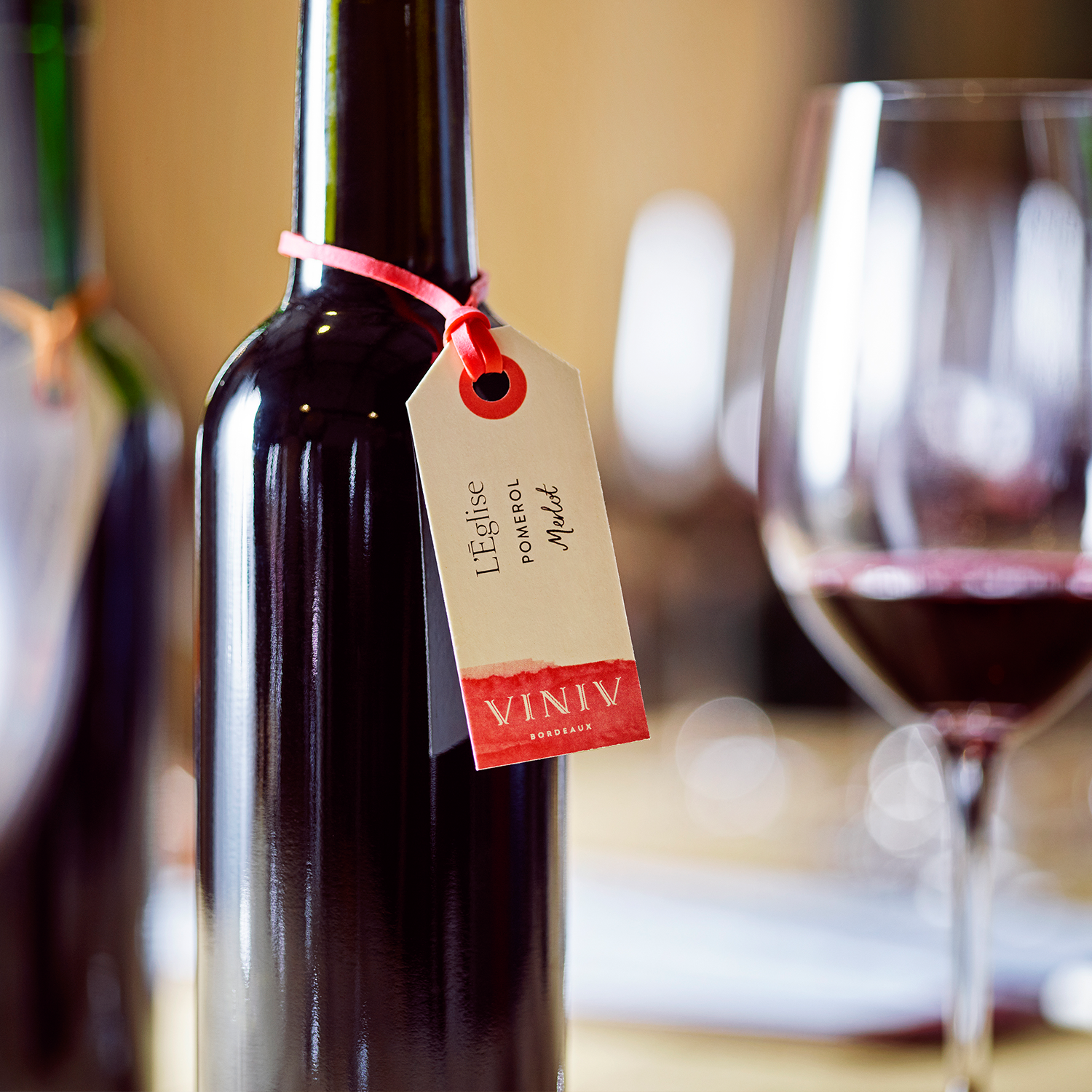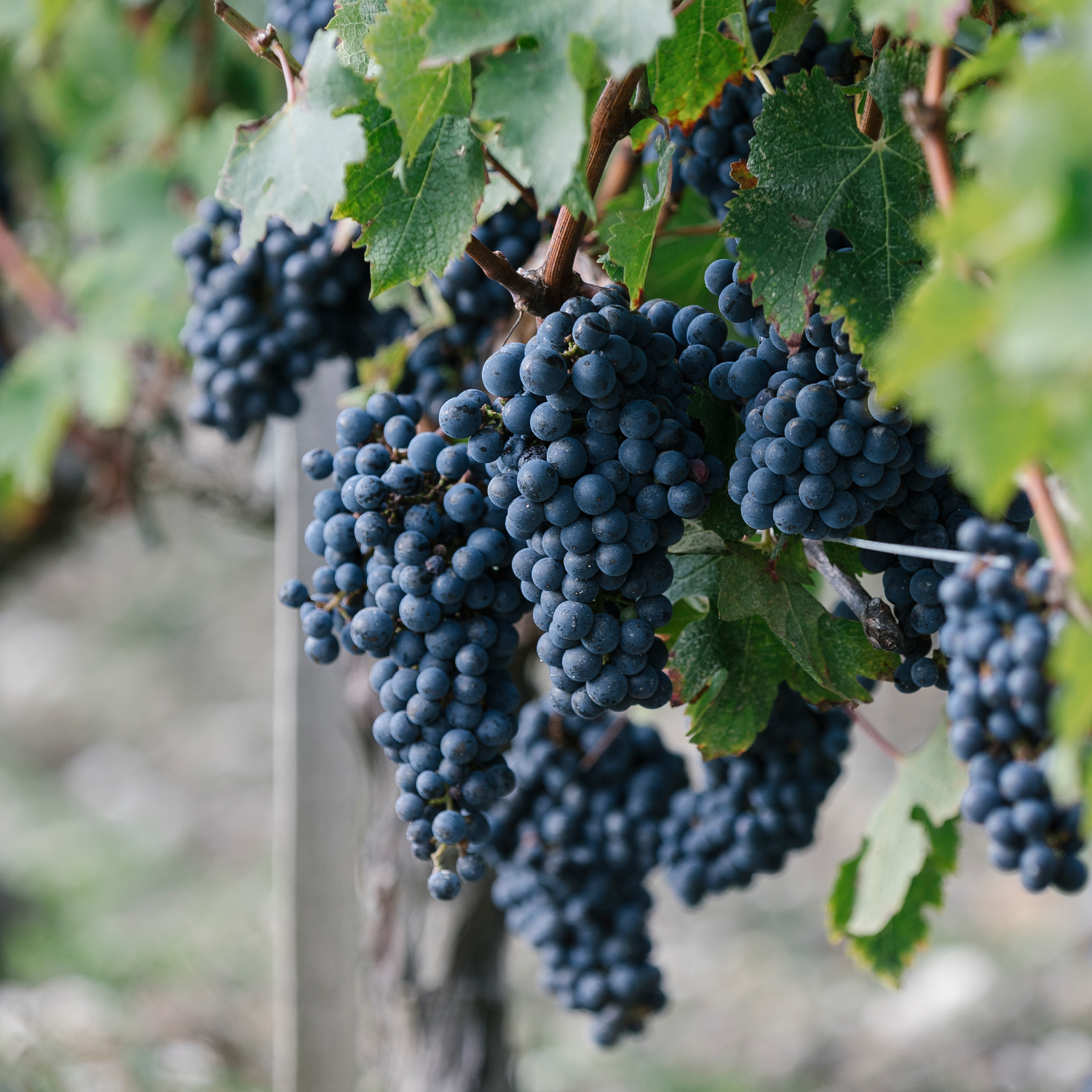
Tasting a wine means examining it through three senses, sight, smell, and taste, to understand its identity and appreciate its balance. Wine tasting can feel intimidating at first and requires practice. Keep in mind that tasting is, above all, about enjoyment. It is a skill you develop over time: keep a notebook to record your observations at each tasting, compare them with those of an expert, and learn throughout your introduction to oenology.
Step 1 of Wine Tasting: Visual Analysis
Sight is the first impression you have of a wine. Begin by observing clarity, meaning the cleanliness of the wine: the absence of suspended particles, deposits, or haze. A cloudy wine may indicate a fault, unless it is an unfiltered wine.
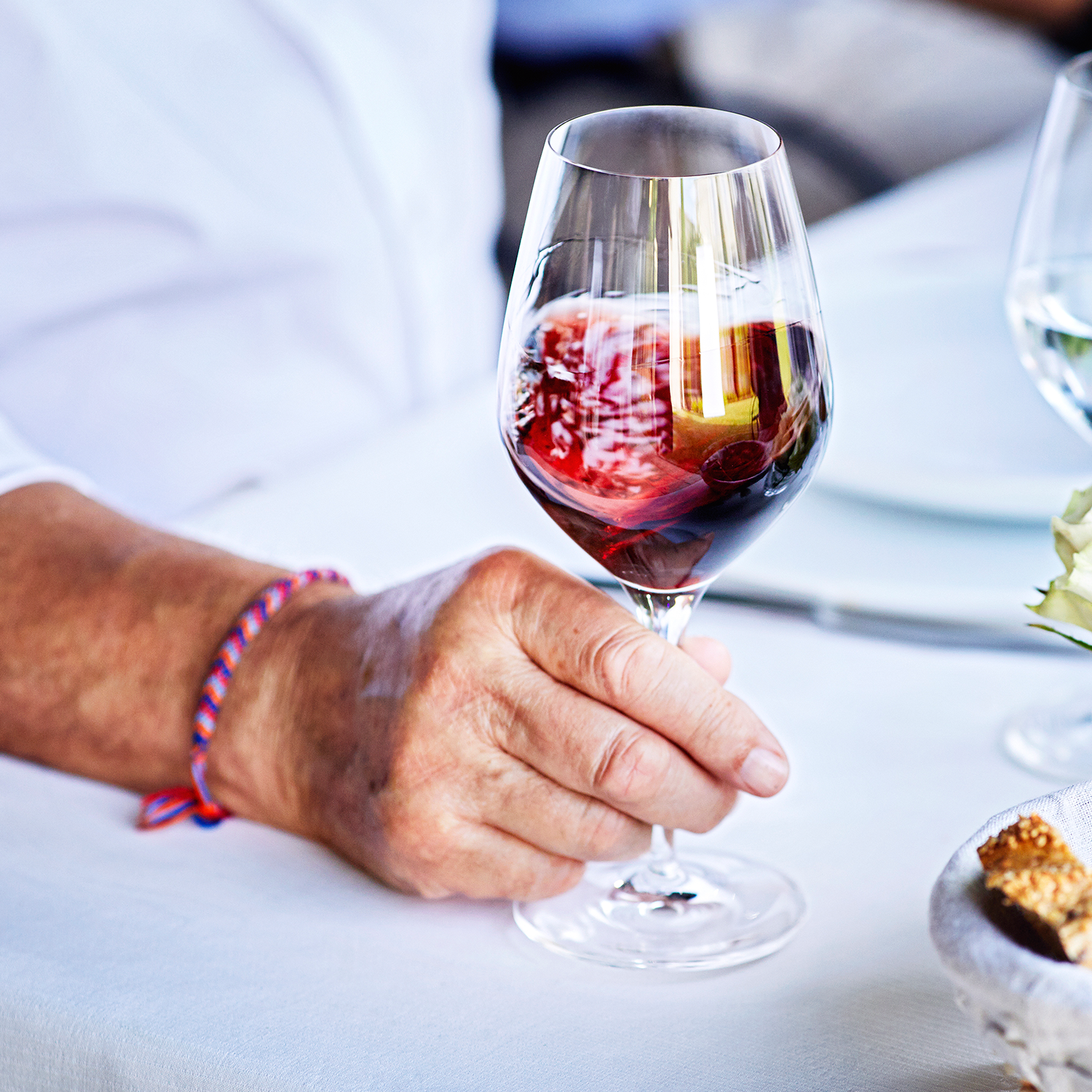
Next, focus on the color, also called the robe. It reveals information about the wine’s age and the grape varieties used. Young white Bordeaux wines are pale yellow with green reflections and can become golden or amber over time. A deeper-colored white wine may sometimes indicate the presence of residual sugar. Red wines evolve from bright ruby to tile-red, and eventually to brown as oxidation progresses.
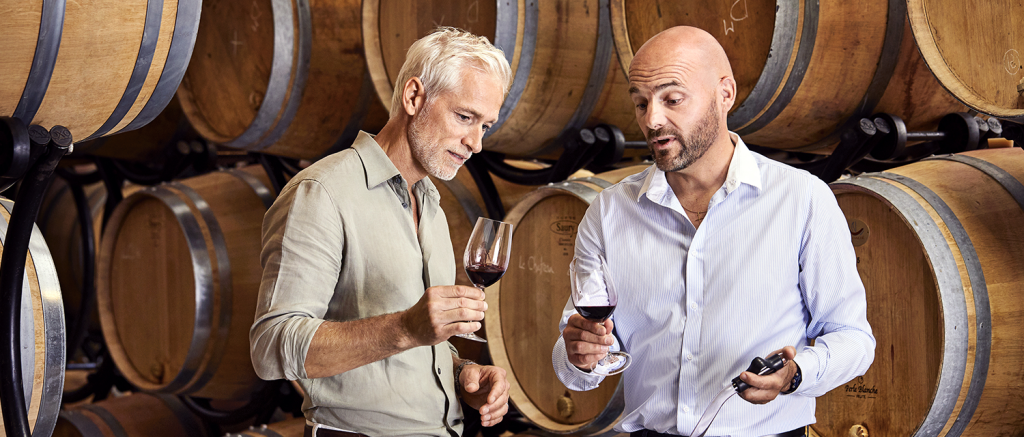
Continue the first step of your wine tasting by assessing the brightness of the wine. Hold your glass up to natural light against a white background. The brighter the wine, the more freshness and acidity it will typically show. Conversely, a dull wine may indicate a particular style of élevage, deliberate filtration choices, or, in some cases, signs of oxidation or fatigue — the rest of the tasting will help confirm this.
Finally, observe the wine’s viscosity by looking at its “tears” or “legs.” These reflect the wine’s alcohol and glycerol content. The thicker and slower the legs of a Bordeaux wine, the more concentrated it tends to be. Such a wine is described as structured, with a dense tannic frame, roundness (smooth tannins, pleasant acidity), and richness on the palate (texture and volume).
Step 2 of Wine Tasting: Olfactory Analysis
The olfactory exam has two stages. The first nose, without swirling, reveals the wine’s spontaneous aromas. The second nose, after aeration, releases the full aromatic complexity of a Bordeaux wine.
There are three main families of aromas:
- Primary aromas come directly from the grape variety and terroir. They include fresh fruits, flowers, and sometimes vegetal or mineral notes.
- Fermentative aromas originate from winemaking, especially alcoholic and malolactic fermentation. They may evoke yeast, bread, brioche, or butter. They reflect the winemaker’s choices and the wine’s style.
- Tertiary aromas develop during aging, whether in barrel or bottle. They appear after several years and include notes of leather, underbrush, spices, candied fruit, or honey. They reveal the wine’s evolution and help anticipate its aging potential.
By analysing these primary, fermentative, and tertiary aromas, you gradually learn to determine whether a wine is young or mature.
Step 3 of Wine Tasting: Gustatory Analysis
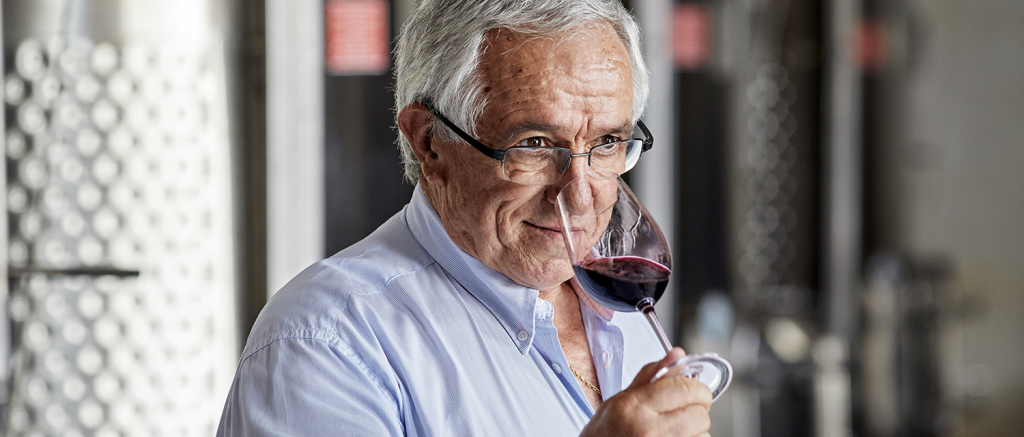
At last comes the moment of truth! Take a small sip of wine, draw a bit of air through your mouth, and exhale through your nose to circulate aromas from the palate to the nose. This is known as retro-olfaction.
This final stage of wine tasting unfolds in three parts:
- The attack — the wine’s first impression on the palate. Is it soft, lively, or powerful? The attack provides clues about freshness, acidity, primary aromatic intensity, and perceived density.
- The mid-palate — this reveals the structure of a Bordeaux wine, the balance between alcohol, acidity, and sugars, as well as texture and roundness contributed by tannin quality.
- The finish — referring to length and aromatic persistence, measured in “caudalies,” a fundamental criterion of quality. A great Bordeaux wine can linger for more than ten seconds on the palate.
Let’s Talk Wine!
In oenology, the term “caudalie” refers to the number of seconds during which a wine’s flavors remain on the palate after swallowing. It reflects the wine’s quality and complexity: the longer the caudalie, the more refined and expressive the wine, showcasing its structure, tannins, and aromatic balance. It is a key criterion for evaluating aging potential and sensory intensity.
Practicing Bordeaux Varietal Tasting with VINIV
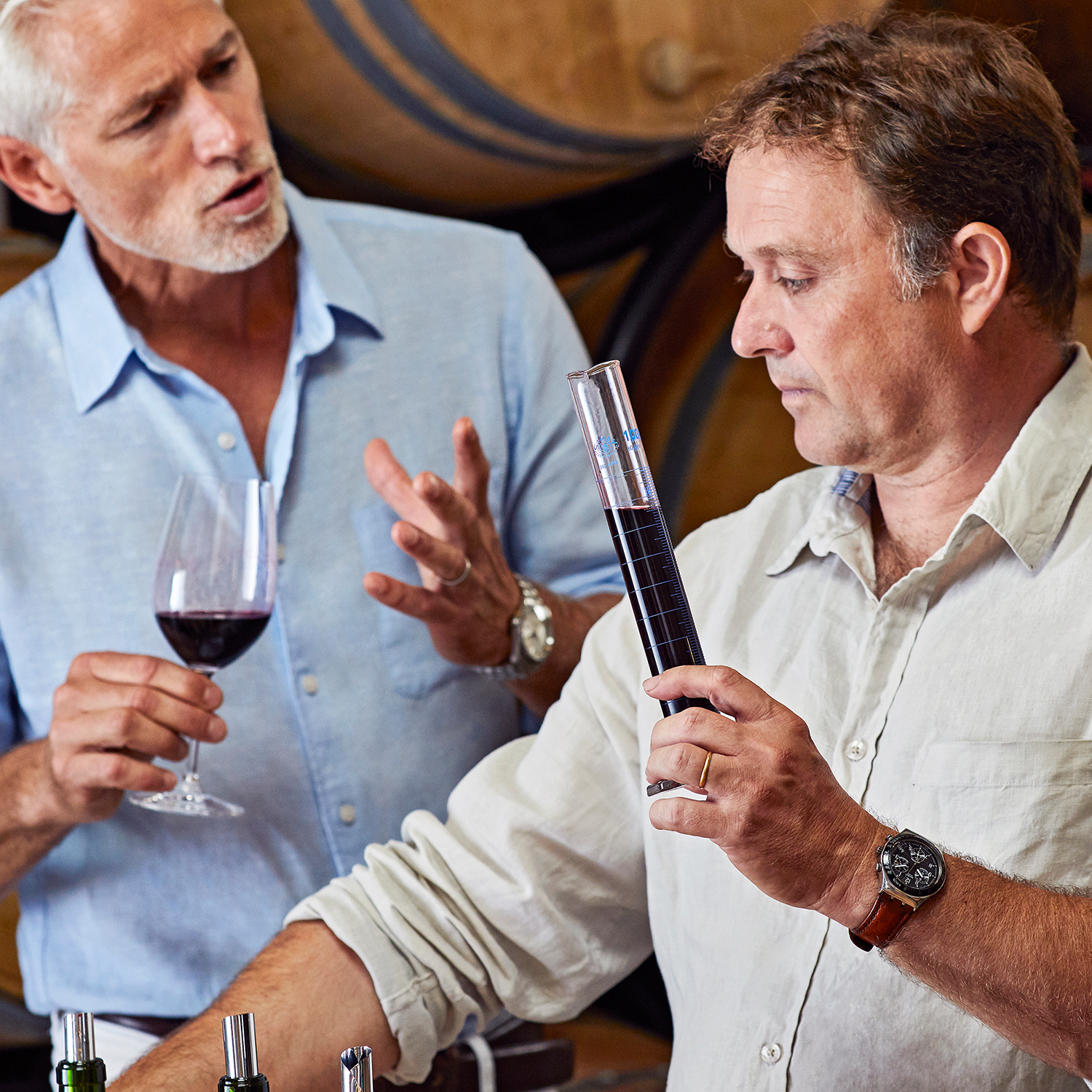
At VINIV, teaching you the art of wine tasting is at the heart of our mission. Our Bordeaux oenologists guide you until you can identify the differences between grape varieties and understand your own preferences.
Guided by our team, you begin your VINIV experience with a tasting of single-varietal Bordeaux wines. The goal: to help you discover the notion of terroir, and the influence of geology and climate on each wine. You taste the region’s signature grape varieties (Merlot, Cabernet Sauvignon, and Cabernet Franc), which form the base of Bordeaux blending: an essential foundation for learning to create your own Bordeaux wine.
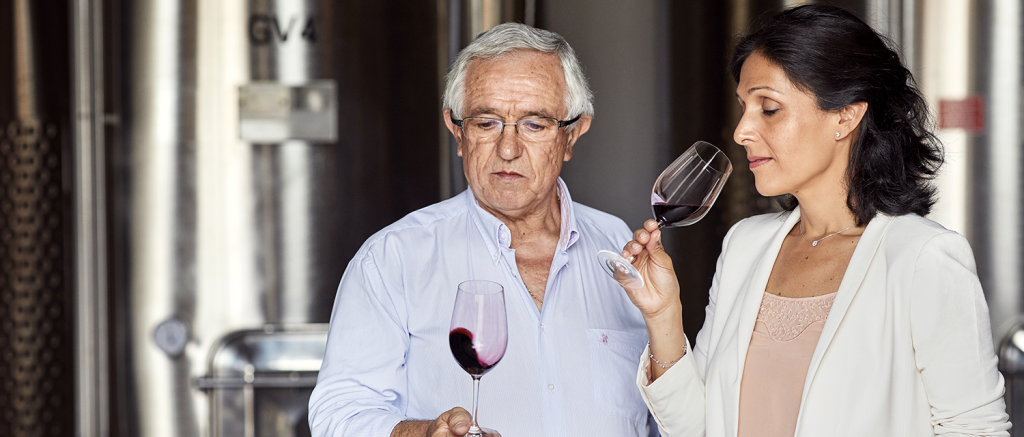
Wine tasting is a skill you learn through observation and by developing your senses. To taste a wine is to understand its identity: its aromas, its grape varieties, and the winemaker’s craft. With practice and consistent notetaking, anyone can refine their palate and develop their critical sense. Above all, tasting wine is about enjoyment: discovering what you love. This principle is central to your VINIV experience, especially during your introduction to oenology.