Contrary to common belief, there is no single ideal serving temperature for wine. Everything depends on the structure, acidity, and aromatic richness you chose when creating your own wine. In Bordeaux, where multiple wine styles coexist, serving a wine at the right temperature requires a true understanding of these styles; something you will learn during your VINIV experience. Wine temperature directly influences the perception of aromas, alcohol, acidity, and tannins. VINIV shares essential guidelines to help you serve wine under optimal conditions.
1. Serving Red Wine at the Right Temperature
- Light, low-tannin red wines, for example those dominated by Merlot, should be served between 14 and 16°C (57–61°F). At this temperature, the fruit remains vibrant and the palate retains freshness.
- Medium-bodied, balanced red wines, made from blends of Merlot and Cabernet Sauvignon, are best served between 16 and 18°C (61–64°F) to fully express fruit, spice, and tannic texture.
- Powerful, concentrated red Bordeaux wines, with a majority of Cabernet Sauvignon, should be served between 17 and 18°C (63–64°F), sometimes up to 19°C (66°F). Beyond this point, alcohol becomes dominant and finesse is lost.
Serving red wine too warm emphasizes alcohol, flattens fruit, creates a sense of heaviness, and dulls delicate aromas. Conversely, serving red wine too cold closes the wine, masks aromas, hardens tannins, and can unbalance your Bordeaux wine.
Note: It is often said that the ideal serving temperature for red wine is “room temperature.” This is both true and false. Modern interiors often exceed 21°C (70°F), which is too warm for serving red wine. Historically, however, this idea made sense. The term “chambré” dates back to the 17th century and referred to wine served in the “chambre” (the dining room) which was not heated as homes are today. Wine brought up from the cellar would reach a temperature between 14°C and 17°C (57–63°F), allowing its aromas and structure to fully express themselves. This practice was known as “chambrer” the wine.
2. Serving White Wine at the Right Temperature
- Fresh, dry white wines, dominated by Sauvignon Blanc, are ideally served between 8 and 10°C (46–50°F) to preserve freshness and vibrancy.
- Richer, more aromatic white wines, with a majority of Sémillon, are best served between 10 and 12°C (50–54°F). At this temperature, Bordeaux whites develop roundness, toasted or vanilla notes, and greater length on the palate.
Serving white wine too cold masks aromas and exaggerates acidity, making the wine seem flat and muted, often described as a “silent” wine. On the other hand, serving white wine too warm dulls aromas, reduces freshness and balance, and makes alcohol feel more prominent, resulting in a heavier, less lively wine.
Finally, context matters. The ideal serving temperature may vary depending on the season, the dish served, and even the moment of tasting. A white wine will not be served the same way at a summer aperitif as it would at a winter meal.
3. How to Serve Wine at the Right Temperature
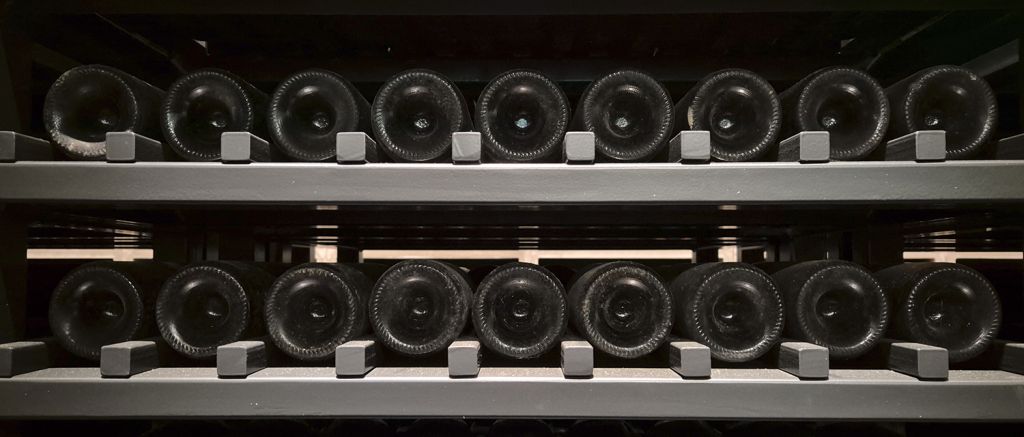
Ideally, wine should be stored at its recommended serving temperature. In reality, this is rarely the case, and that’s perfectly normal. A wine cellar should above all maintain a stable temperature, ideally around 12°C (54°F), to ensure proper storage. Temperature stability preserves aromas, slows aging, and prevents thermal shock.
However, some Bordeaux wines require slightly warmer or cooler serving temperatures. So how should temperature be adjusted before serving? The key is to avoid sudden changes that could damage the wine. Temperature adjustments should be made gently, and the secret is anticipation.
If the wine is too warm: how to cool it down
- Place the bottle in an ice bucket filled with ice and water. A few minutes are usually enough, provided you monitor it regularly. This is the fastest and most even method.
- Alternatively, place the bottle in the refrigerator: 30–45 minutes for white wine and about 20 minutes for a red Bordeaux that is slightly too warm.
- Avoid the freezer: sudden temperature shocks can negatively affect the tasting experience.
Keep in mind that wine continues to evolve in the glass once poured or decanted. It can be wise, especially for red wines, to serve the wine slightly cool and allow it to open gradually.
If the wine is too cold: how to warm it up
- Remove the bottle from the refrigerator 30 to 60 minutes before serving.
- Simply pouring the wine into a glass or a decanter will help it warm up gently.
- Never use a direct heat source (hot water, radiator), as this can damage the wine.
The winemaker’s eye: a wine thermometer can be a valuable tool for serving wine at the right temperature, particularly for fine or valuable bottles.
Parlons vigneron !
It is easy to confuse freshness with coldness when serving wine. Freshness is a sensation of balance, not an extremely low temperature. It describes a wine’s liveliness, often linked to acidity and aromatic expression. A wine can be fresh without being chilled. Coldness, on the other hand, refers strictly to temperature: serving a wine too cold strips it of its aromas and complexity.
Wine temperature is one of the most decisive factors in fully appreciating a tasting, especially with Bordeaux wines, whose diversity of styles demands precision and nuance. A wine served too cold becomes closed, while a wine served too warm feels heavy. Finding the right serving temperature allows the wine to express its true identity.
When you create your own wine with VINIV, you learn to master all these subtleties. VINIV experts also remain at your disposal after your experience, continuing to advise you on how best to serve your wine.